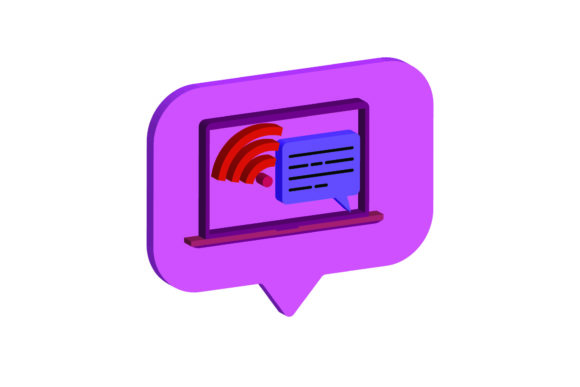
3D Icon Laptop Wifi
In the modern digital landscape, visual communication is not merely an aesthetic choice; it is a functional necessity. Whether you are designing a user interface for a new application, creating marketing materials for a small business, or developing educational content, the clarity and speed of your visual language directly impact user comprehension. This is where specialized assets like the 3D Icon Laptop Wifi become indispensable tools in your creative workflow. It is not just a picture of a computer with signal bars; it is a precise graphical representation of connectivity, remote work, cloud access, and digital presence.
Understanding how to integrate high-quality 3D icons into your projects requires more than simply dragging and dropping an image onto a canvas. It involves considering file compatibility, scalability, editing capabilities, and the broader context of your design system. The specific asset described here—a set of six digital files representing a laptop with wifi connectivity—offers a robust solution for professionals who need consistency and flexibility across various platforms. By examining the technical specifications and practical applications of this icon set, we can explore how it fits into efficient design processes.
The Role of 3D Icons in Visual Communication
Flat design has dominated the industry for years, but 3D icons have seen a significant resurgence due to their ability to add depth, realism, and tactile quality to digital interfaces. A 3D icon laptop wifi symbol immediately conveys concepts such as "online status," "wireless connection," or "remote capability" without requiring text. For educators, marketers, and freelancers, this reduction of cognitive load is crucial. Users scan interfaces quickly; a well-designed icon allows them to process information faster than reading labels.
However, the effectiveness of any icon depends heavily on its source format. Many designers encounter frustration when they download a PNG file only to realize it cannot be resized without losing quality, or when they need to change the color scheme to match a brand guideline but find the colors are baked into the pixels. This is why the availability of multiple file formats in a single package is a critical factor in workflow efficiency. The inclusion of vector-based files alongside raster images ensures that the asset remains versatile throughout the project lifecycle.
Technical Specifications and Workflow Integration
The value of this particular design package lies in its comprehensive format support. Receiving six distinct file types—AI, EPS, SVG, DXF, JPG, and PNG—caters to different stages of production and various software environments. Let’s break down how each format interacts with common professional tools and workflows.
Vector Formats: AI, EPS, and SVG
For graphic designers and UI/UX specialists, the AI (Adobe Illustrator) and EPS (Encapsulated PostScript) files are foundational. These are vector-based formats, meaning they are composed of mathematical paths rather than fixed pixels. This characteristic allows for infinite scalability without loss of resolution. If you are designing a billboard advertisement one day and a mobile app icon the next, these files ensure the laptop and wifi signals remain crisp and clear at any size.
The SVG (Scalable Vector Graphics) format is particularly relevant for web developers and front-end designers. SVGs are XML-based, making them lightweight and easily editable via code. You can manipulate the stroke width, fill color, and opacity directly in CSS or JavaScript. When implementing a 3D icon laptop wifi into a website header or a dashboard navigation bar, an SVG ensures fast loading times and perfect rendering on high-DPI screens. Furthermore, because the design is easy to edit, you can extract individual elements—such as separating the laptop body from the wifi waves—to create variations or animations.
Cut Files: DXF
The inclusion of a DXF (Drawing Exchange Format) file might seem unusual for purely digital design, but it opens up hybrid physical-digital workflows. If you are a small business owner producing branded merchandise, such as laser-cut wooden signs, vinyl decals for laptops, or custom packaging inserts, the DXF file provides the necessary path data for cutting machines. This bridges the gap between digital branding and physical product creation, allowing for a cohesive brand identity that extends beyond the screen.
Raster Formats: JPG and PNG
For users who do not have access to vector-editing software, or for those needing quick previews, the JPG and PNG files are essential. The specified canvas size of 1920px x 1280px provides a high-resolution base suitable for desktop backgrounds, social media banners, or presentation slides. The PNG format, likely featuring transparency, is vital for overlaying the icon onto different background colors or textures without unsightly white boxes. These files serve as the final output for many non-designer stakeholders, such as marketers preparing email newsletters or bloggers writing articles about technology trends.
Practical Implementation Across Industries
The versatility of the 3D Icon Laptop Wifi asset makes it applicable across a wide spectrum of professional activities. Here is how different user groups can leverage these files to enhance their productivity and output quality.
For Educators and Content Creators
Educators developing online courses or instructional materials often struggle to explain abstract concepts like "cloud storage" or "virtual collaboration." Using a recognizable 3D icon helps anchor these concepts visually. In a PowerPoint presentation or a PDF workbook, inserting the PNG version of the laptop icon provides immediate context. If the educator needs to customize the icon to match their course branding, they can use the AI or SVG file to adjust colors, ensuring visual consistency throughout the learning module.
For Marketers and Small Business Owners
Marketing campaigns require rapid iteration. A local business promoting a "Remote Work Friendly" café or a tech startup advertising a new SaaS platform can use this icon set to create cohesive social media graphics. The ability to switch between formats means the same asset can be used in Canva (using the PNG), sent to a printer (using the AI/EPS), or embedded in a WordPress post (using the SVG). This reduces the time spent recreating assets for different channels, allowing marketers to focus on strategy and copywriting.
For Developers and Product Designers
In software development, consistency is key. A design system should rely on a unified icon library. Integrating the SVG version of the laptop wifi icon into a component library ensures that every instance of the icon behaves predictably. Developers can animate the wifi waves using CSS keyframes to indicate active connectivity, adding a layer of interactivity that enhances user experience. The DXF file could also be used if the company produces hardware accessories, ensuring the logo on the physical device matches the digital interface.
Best Practices for Organization and Quality Control
Acquiring the files is only the first step. To maximize the utility of the 3D Icon Laptop Wifi set, proper organization and quality control measures should be implemented. Start by creating a dedicated folder structure within your project management system. Separate the raw vector files from the exported raster versions. This prevents accidental overwriting and keeps the original editable sources safe.
When working with vector files, always check the layer hierarchy. Ensure that the wifi signals are grouped separately from the laptop chassis. This separation is crucial for future edits. If you decide later that the wifi color needs to change from blue to green to match a rebranding effort, having separate layers saves hours of manual tracing. Additionally, verify the color modes. If the designs are intended for print, convert the AI/EPS files to CMYK mode before sending them to the printer. For web use, ensure the SVGs are optimized to reduce file size without compromising visual fidelity.
Consistency checks are also vital. Compare the 3D icon against other elements in your design to ensure the lighting, shadows, and perspective align. A 3D icon that looks too realistic compared to flat UI elements can create visual dissonance. You may need to adjust the drop shadow intensity or flatten certain details to harmonize the icon with the rest of your design system. The ease of editing provided by the included formats makes these adjustments straightforward.
Long-Term Value and Scalability
Investing in high-quality, multi-format assets like this 3D icon laptop wifi set offers long-term value. Unlike temporary stock photos that may become outdated or lose relevance, a well-designed icon serves as a timeless symbol of connectivity. As remote work continues to evolve and digital interaction becomes more central to daily life, the demand for clear, intuitive visual cues will only increase.
Moreover, the ability to scale and adapt the asset means it can grow with your projects. Whether you are launching a simple blog post or building a complex enterprise application, the same core asset can be utilized. This scalability reduces the need to constantly search for new resources, streamlining the creative process and allowing for greater focus on innovation and execution. By understanding the technical nuances of AI, EPS, SVG, DXF, JPG, and PNG formats, you can fully harness the potential of this design, turning a simple icon into a powerful tool for effective communication.